Physics: Joseph Fourier
Physics: Joseph Fourier
Wikimedia Commons, CC BY-SA
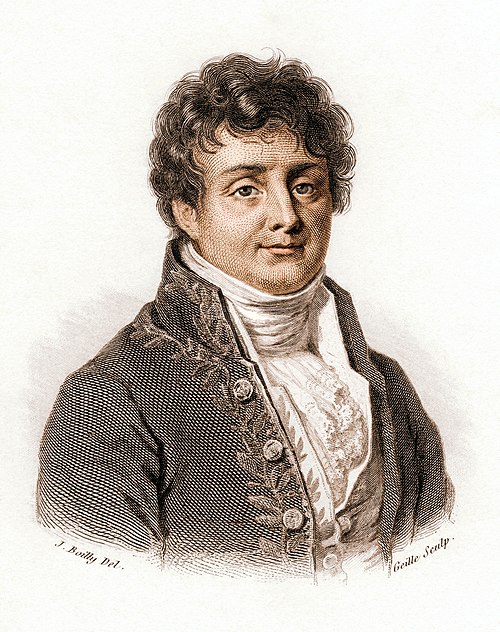
Joseph Fourier (1768) Jean-Baptiste Joseph Fourier (; French: [ʒɑ̃ batist ʒozɛf fuʁje]; 21 March 1768 – 16 May 1830) was a French mathematician and physicist born in Auxerre, Burgundy and best known for initiating the investigation of Fourier series, which eventually developed into Fourier analysis and harmonic analysis, and their applications to problems of heat transfer and vibrations.

Commentary

Commentary

Joseph Fourier (1768) Jean-Baptiste Joseph Fourier (; French: [ʒɑ̃ batist ʒozɛ f fuʁje]; 21 March 1768 – 16 May 1830) was a French mathematician and physicist born in Auxerre, Burgundy and best known for initiating the investigation of Fourier series, which eventually developed into Fourier analysis and harmonic analysis, and their applications to problems of heat transfer and vibrations.

Commentary

Why is Joseph Fourier remembered? Eve ry major advance in physics was made by a person working to understand something that didn't quite make sense yet. Joseph Fourier was one of those people.

Commentary

About Joseph Fourier Jean-Baptiste Joseph Fourier (; French: [ʒɑ̃ batist ʒozɛf fuʁje]; 21 March 1768 – 16 May 1830) was a French mathematician and physicist born in Auxerre, Burgundy and best known for initiating the investigation of Fourier series, which eventually developed into Fourier analysis and harmonic analysis, and their applications to problems of heat transfer and vibrations. The Fourier transform and Fourier's law of conduction are also named in his honour. Fourier is also generally credited with the discovery of the greenhouse effect.