May 15, 1618
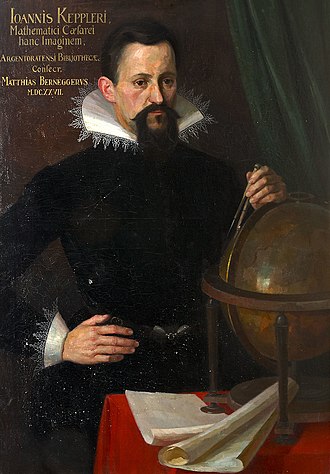
Johannes Kepler confirms his previously rejected discovery of the third law of planetary motion (he first discovered it on March 8 but soon rejected the idea after some initial calculations were made).
Commentary
Commentary
On May 15, in the year 1618:
Johannes Kepler confirms his previously rejected discovery of the third law of planetary motion (he first discovered it on March 8 but soon rejected the idea after some initial calculations were made).
In astronomy, Kepler's laws of planetary motion give good approximations for the orbits of planets around the Sun.
Why May 15, 1618 matters:
Johannes Kepler confirms his previously rejected discovery of the third law of planetary motion (he first discovered it on March 8 but soon rejected the idea after some initial calculations were made).
What began on this day left a lasting mark on history. The effects were felt immediately and continued to shape events, ideas, and lives long afterwards.
Historical context: May 15, 1618
The Early Modern era accelerated global exchange of ideas, goods, and technologies, expanding science, navigation, and everyday material culture.
The event on this day: Johannes Kepler confirms his previously rejected discovery of the third law of planetary motion (he first discovered it on March 8 but soon rejected the idea after some initial calculations were made).
Source: https://en.wikipedia.org/wiki/Kepler's_laws_of_planetary_motion (Wikipedia, CC BY-SA)
Sources: Wikipedia (CC BY-SA)
FREE DAILY EMAIL
Get it in your inbox
One short, ad-free email each morning. Always free, unsubscribe anytime.
Commentary
Commentary