Astronomy: The Light-Year
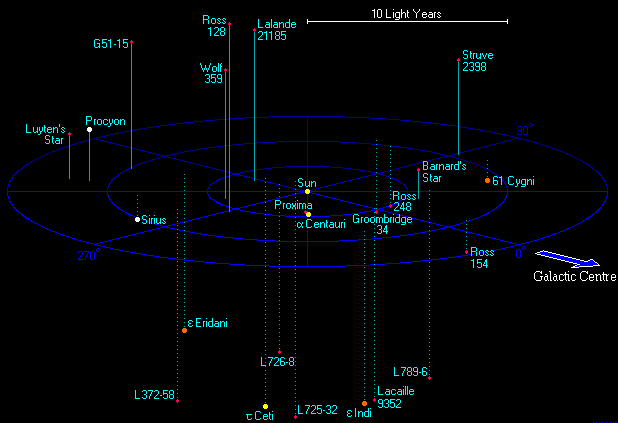
Astronomy: The Light-Year
Wikimedia Commons, CC BY-SA
The Light-Year A light-year, alternatively spelled light year (ly or lyr), is a unit of length used to express astronomical distances and is equal to exactly 9460730472580.8 km, which is approximately 9.46 trillion kilometres or 5.88 trillion miles. As defined by the International Astronomical Union (IAU), a light-year is the distance that light travels in vacuum in one Julian year (365.25 days).

Commentary

Commentary

The Light-Year A light-year, alternatively spelled light year (ly or lyr), is a unit of lengt h used to express astronomical distances and is equal to exactly 9460730472580.8 km, which is approximately 9.46 trillion kilometres or 5.88 trillion miles. As defined by the International Astronomical Union (IAU), a light-year is the distance that light travels in vacuum in one Julian year (365.25 days). Despite its inclusion of the word "year", the term is not a unit of time.

Commentary

Why The Light-Year matters: These foundational ideas and techniques are the tools astronomers us e to measure, classify, and understand everything from nearby planets to the most distant galaxies. The light-year is most often used when expressing distances to stars and other distances on a galactic scale, especially in non-specialist contexts and popular science publications. The unit most commonly used in professional astronomy is the parsec (pc), approximately 3.26 light-years.

Commentary

Deep dive: The Light-Year The unit most commonly used in professional astronomy is the parsec (pc), approximately 3.26 light-years. Source: https://en.wikipedia.org/wiki/Light-year (Wikipedia, CC BY-SA)